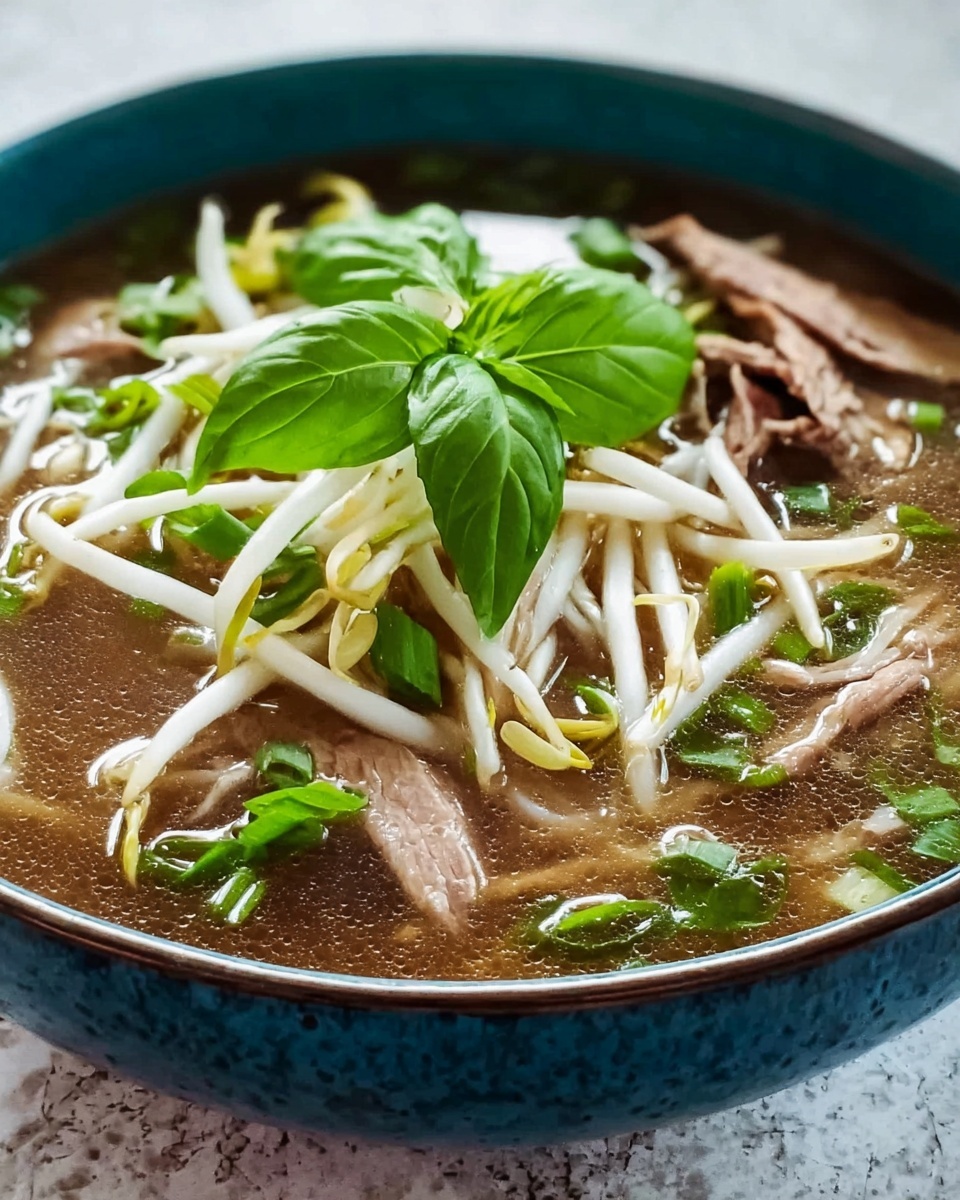
If you have ever craved the comforting, aromatic flavors of classic Vietnamese pho but wanted a version that is approachable for any home cook, then you’re in for a treat with My Easy Version – Beef Pho Recipe. This recipe strips down the complexity without losing the soul of the dish, using simple ingredients that come together to create a rich, fragrant broth paired with tender beef and fresh herbs. Whether it’s a chilly evening or a special weekend meal, you’ll find this interpretation irresistible and definitely keep it in your rotation.
Ingredients You’ll Need
Gathering the ingredients is straightforward but essential, as each item plays a distinct role in bringing the bright, hearty, and nuanced flavors that make this dish so beloved. From the marrow-rich beef bones that build the broth’s depth to the fresh herbs that brighten every spoonful, every element counts.
- Beef neck bones or shank bones: These provide the rich, gelatinous base for a deeply flavorful broth that’s the heart of the pho.
- Beef fillet or beef shave: Adds tender, melt-in-your-mouth slices that cook gently in the hot broth.
- Turnips: Sliced in big chunks, they soften and subtly sweeten the broth as it simmers.
- Roasted ginger: Offers a fragrant warmth and a bit of spicy complexity that defines pho’s signature aroma.
- Roasted onion: Adds a caramelized sweetness and depth to the broth’s flavor.
- Rice noodles: The perfect silky texture that soaks up the broth beautifully for every comforting bite.
- Cilantro, basil, green onions, sliced onions, bean sprouts, and jalapeño: These fresh add-ins bring vibrant herbal notes and a satisfying crunch.
- Soy sauce: Enhances the umami and saltiness, balancing all flavors perfectly.
- Salt and pepper: Essential to season the broth just right according to your taste.
How to Make My Easy Version – Beef Pho Recipe
Step 1: Create the Flavorful Broth Base
Start by filling a large pot with water—about three-quarters full or just above half—and adding the beef neck bones, roasted ginger, roasted onion, and turnip chunks. This combination is your broth’s foundation, offering complex layers of flavor with minimal fuss.
Step 2: Season the Broth
Next, stir in 3 tablespoons of soy sauce to add that lovely umami touch that brings all the ingredients together. The soy sauce also helps to deepen the broth’s color, making it as inviting visually as it is on the palate.
Step 3: Bring It to a Boil and Skim
Bring the pot to a boil and carefully skim off any foam or impurities that rise to the surface. This step keeps your broth clear and pure, ensuring a refined, clean taste that’s essential to delicious pho.
Step 4: Simmer to Develop Richness
Lower the heat and let the broth gently simmer for 1 to 2 hours. This slow cooking extracts all the flavors from the bones and vegetables, resulting in a golden, aromatic broth. Don’t forget to season with salt and pepper gradually, tasting as it cooks to find the perfect balance.
Step 5: Prepare the Rice Noodles
While the broth simmers, cook the rice noodles according to the package instructions, then drain and set them aside, ready to soak up that beautiful broth later.
Step 6: Assemble the Bowl
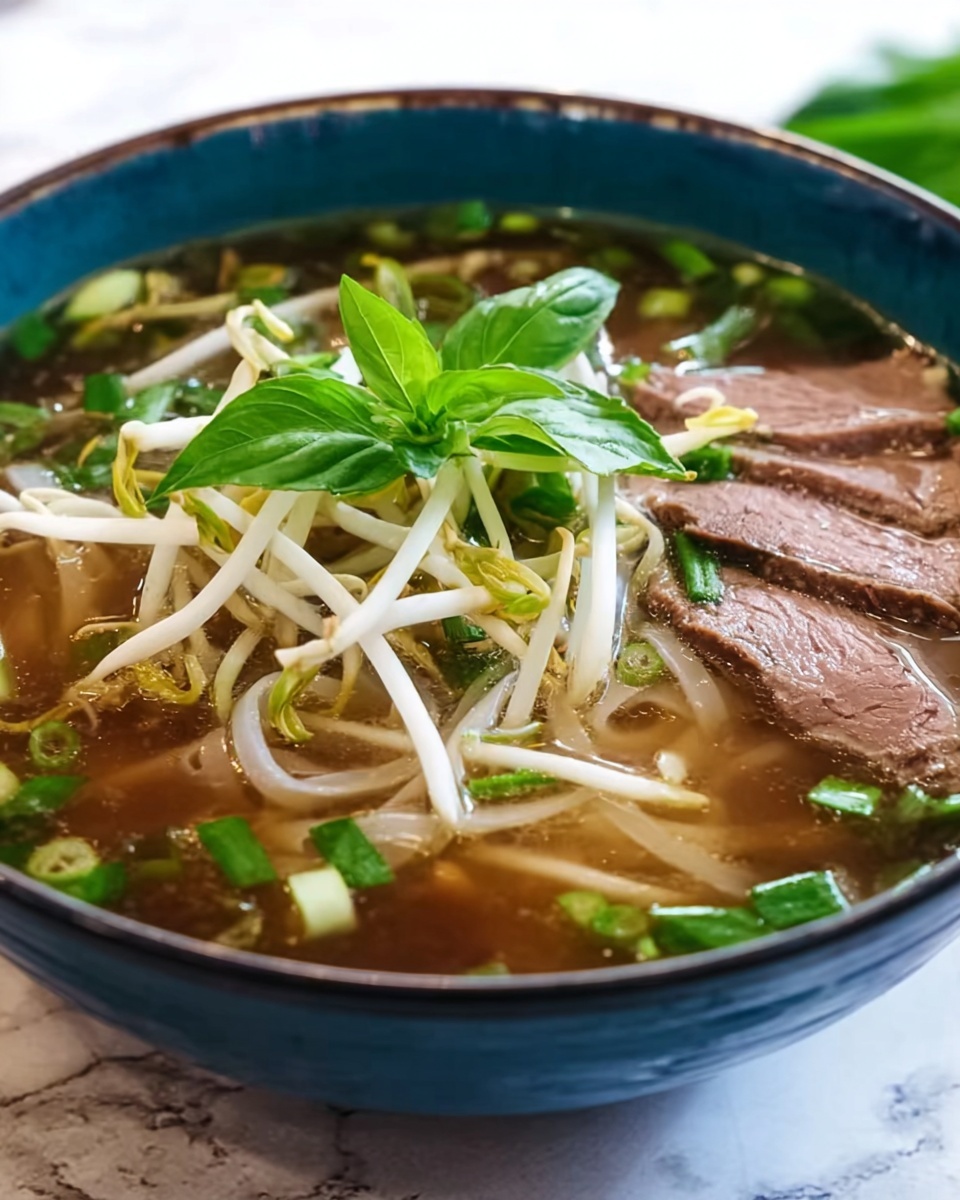
In a large serving bowl, combine the cooked rice noodles, thinly sliced beef fillet, green onions, jalapeño slices, bean sprouts, sliced onions, and fresh herbs like cilantro and basil. This fresh mix bursts with contrast against the rich broth.
Step 7: Pour Hot Broth Over the Bowl
Finally, ladle the steaming hot broth directly over the assembled noodles and beef. The heat from the broth will gently cook the thin slices of beef, making it tender and juicy just like in traditional pho.
Step 8: Serve and Savor
Now it’s time to dig in and enjoy every fragrant, comforting spoonful of this easy and satisfying meal that truly warms the soul.
How to Serve My Easy Version – Beef Pho Recipe
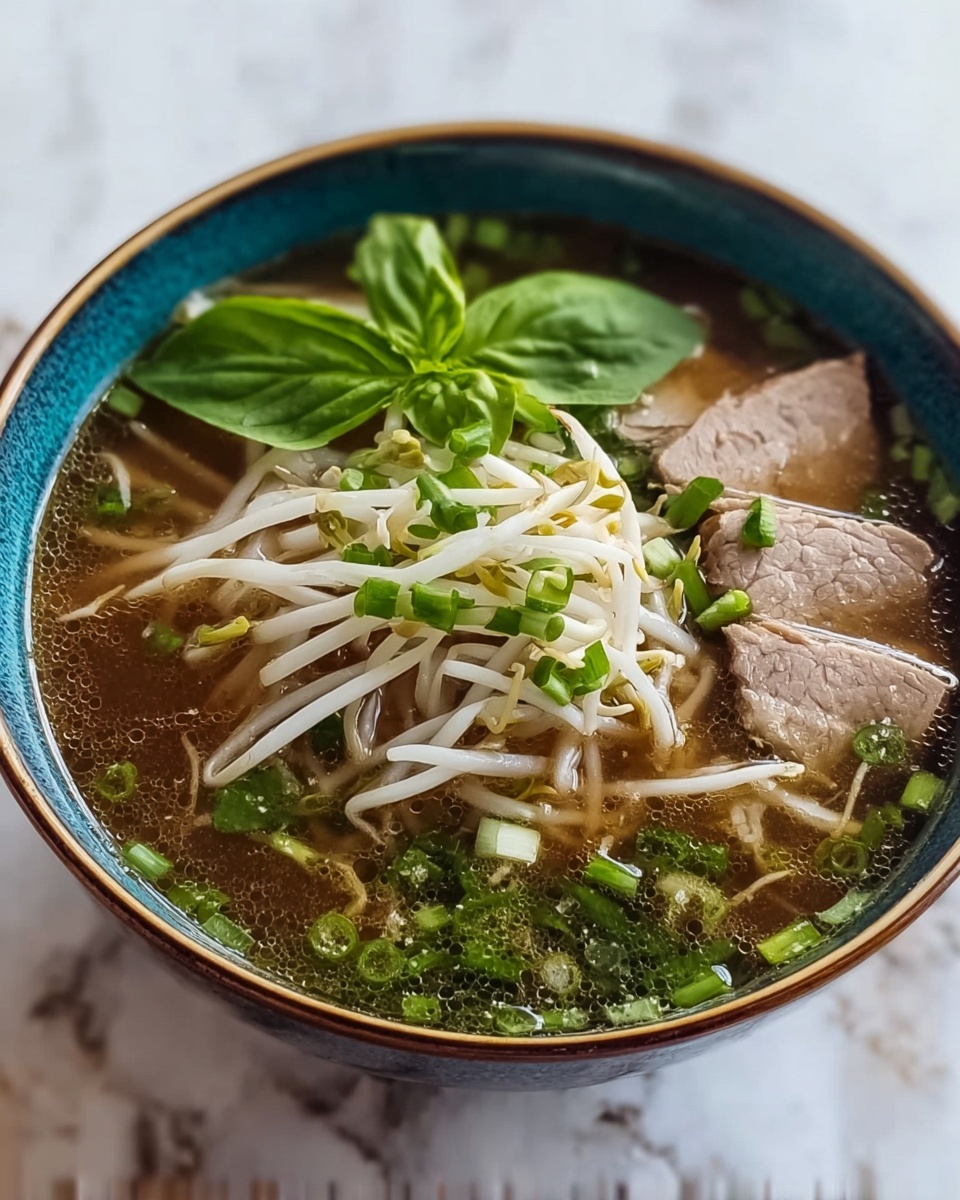
Garnishes
The garnishes are what make each bowl uniquely yours. Crisp bean sprouts add texture, fresh herbs like basil and cilantro offer bursts of flavor, and jalapeño slices give a spicy kick if you’re feeling adventurous. Don’t forget a squeeze of lime juice for a bright contrast to the rich broth—it truly elevates every bite.
Side Dishes
Simple side dishes like crispy spring rolls or a fresh Vietnamese salad pair beautifully with your beef pho, balancing warmth and freshness. These add a different texture and can elevate your meal into a full Vietnamese-inspired feast.
Creative Ways to Present
For a twist, serve the components separately with the broth on the side, letting guests customize their bowls. Or try adding a soft-boiled egg for richness or a drizzle of chili oil for that smoky heat. Presentation can be as traditional or inventive as you like, making this recipe versatile and fun.
Make Ahead and Storage
Storing Leftovers
If you have any leftover broth or components, store the broth separately in airtight containers in the refrigerator for up to 3 days. Keep the noodles and garnishes aside to avoid sogginess. This way, you can reheat and assemble fresh bowls anytime.
Freezing
The beef broth freezes beautifully, so pour it into freezer-safe containers or bags. Freeze for up to 3 months to have homemade pho broth ready whenever the craving hits—just thaw and reheat gently.
Reheating
When reheating, do so gently over medium heat, stirring occasionally to preserve the broth’s clarity and flavor. Reheat the beef and noodles separately with just a quick warm-up to maintain their texture and freshness.
FAQs
Can I use other cuts of beef for this pho recipe?
Absolutely! While beef neck bones and shank provide great flavor for the broth, you can also use oxtail or marrow bones. For the slices, sirloin or ribeye thinly sliced can work beautifully, just fresh and tender.
Is it necessary to roast the ginger and onion?
Roasting the ginger and onion adds a wonderful caramelized depth that lifts the broth’s flavor significantly. If you’re short on time, you can skip roasting, but it’s highly recommended for that authentic smoky aroma.
Can this recipe be made vegetarian or vegan?
Though this version centers on beef, you can adapt by substituting vegetable broth and adding tofu or mushrooms for body. Use soy sauce and similar fresh herbs to keep the pho spirit alive without animal products.
How do I get the beef slices to be tender and cooked perfectly in the bowl?
The trick is to slice the beef very thin and add it raw to the hot broth right before serving. The steaming broth gently cooks the meat to tender perfection without overcooking it.
What are some common side garnishes I can add?
Besides the classic basil, cilantro, and bean sprouts, you can add lime wedges, thinly sliced chili peppers, hoisin sauce, or sriracha for extra layers of flavor and heat. Customize your bowl exactly how you love it!
Final Thoughts
My Easy Version – Beef Pho Recipe is a heartfelt dish that’s surprisingly simple to make at home yet delivers that rich and vibrant pho experience we all adore. Whether you’re an experienced cook or just exploring Vietnamese cuisine, this recipe is a wonderful way to bring warmth, comfort, and a burst of fresh flavors to your table. I can’t wait for you to try it and make it your own!
Print
My Easy Version – Beef Pho Recipe
- Prep Time: 15 minutes
- Cook Time: 1 hour 30 minutes
- Total Time: 1 hour 45 minutes
- Yield: 6 servings
- Category: Soup
- Method: Stovetop
- Cuisine: Vietnamese
Description
This easy Beef Pho recipe offers a rich, flavorful Vietnamese beef noodle soup that combines a slow-cooked beef broth with tender beef slices, rice noodles, and fresh herbs and vegetables. Perfect for a comforting meal that highlights traditional pho flavors with accessible ingredients and simple steps.
Ingredients
Broth Ingredients
- 3 pounds beef neck bones or shank bones
- 2 turnips, sliced in big chunks
- 1 ginger, roasted
- 1 large onion, roasted
- 3 tablespoons soy sauce (or fish sauce)
- Salt and pepper to taste
Soup Ingredients
- 1 pound beef fillet or beef shave, thinly sliced
- 1 package rice noodles, cooked and drained
- Add-in vegetables: cilantro, basil, green onions, sliced onions, bean sprouts, and jalapeño
Instructions
- Prepare the broth: Fill a large pot with water about 3/4 or just above half full. Add the beef neck bones, roasted ginger, roasted onion, and sliced turnips to the pot.
- Add seasonings: Add 3 tablespoons of soy sauce (or fish sauce if preferred) to the pot for depth of flavor.
- Boil and skim: Bring the mixture to a boil, then remove any foam that forms on top to clarify the broth.
- Simmer to develop flavors: Reduce the heat and slow-cook the broth for 1 to 2 hours, allowing flavors to develop fully. Season with salt and pepper to taste.
- Prepare noodles: While the broth is cooking, prepare the rice noodles according to the package instructions, then drain and set aside.
- Assemble the bowls: In large serving bowls, add a portion of the cooked rice noodles, thinly sliced beef fillet, green onions, jalapeño, bean sprouts, sliced onions, cilantro, and basil.
- Pour hot broth: Pour the hot, flavorful broth over the noodles and beef in each bowl to cook the thin beef slices and combine the flavors.
- Serve and enjoy: Serve the beef pho immediately while hot, allowing diners to enjoy fresh, comforting Vietnamese flavors.
Notes
- Roasting the ginger and onion before adding them to the broth enhances the depth and sweetness of the broth.
- Use fish sauce as an alternative to soy sauce for a more authentic pho flavor if desired.
- Adjust the heat by adding more or fewer jalapeños according to your preference.
- Fresh herbs like cilantro and basil are essential for authentic flavor and freshness.
- For a clearer broth, periodically skim off any foam or impurities while simmering.
- Thinly slicing the beef fillet helps it cook quickly when hot broth is poured over it.