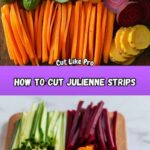
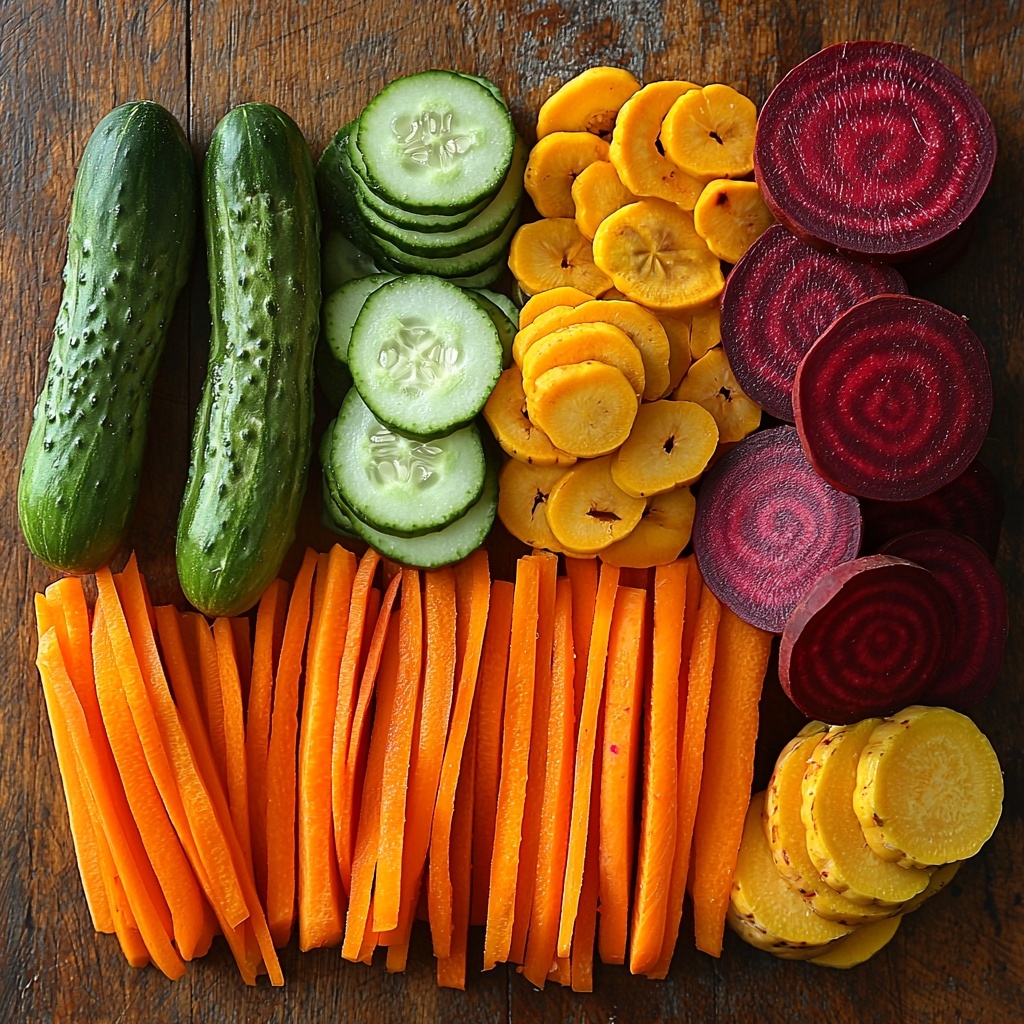
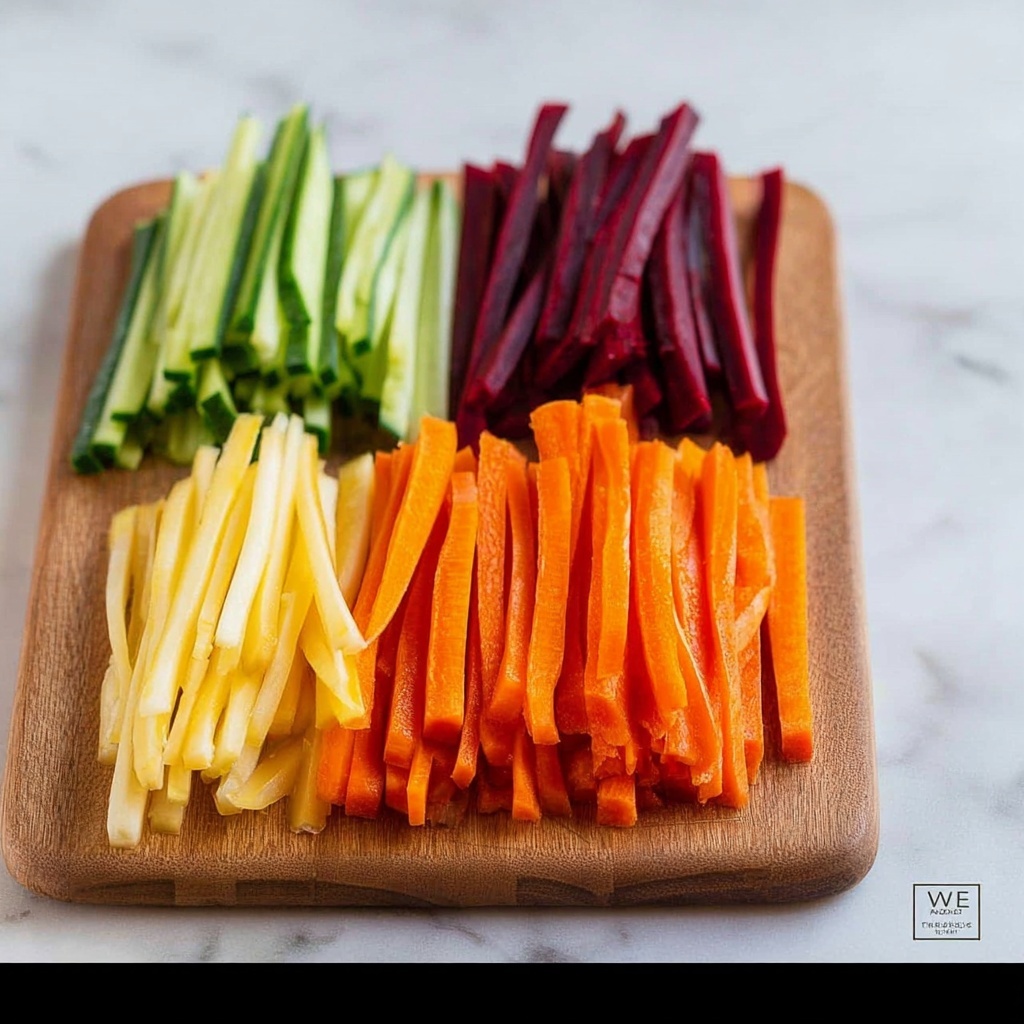
If you’ve ever admired the elegant, matchstick-thin strips of vegetables in a gourmet salad or stir-fry and wondered how to replicate that at home, you’re in the right place! This guide on How to Cut Julienne Strips Recipe will walk you through the simple yet impressive technique to transform any vegetable into beautiful, uniform strips that elevate both the presentation and texture of your dishes. From crisp carrots to refreshing cucumbers, mastering this skill adds that extra flair every home cook should have in their repertoire.
Ingredients You’ll Need
To get started with this easy and essential technique, you only need a handful of simple ingredients. Each vegetable brings its own burst of color, crunch, and freshness, making them perfect candidates for julienne cutting.
- 1 fresh vegetable: Choose crisp options like carrot, cucumber, beet, or squash, which hold their shape well when cut into strips.
- Vegetable peeler: Helpful for removing tough outer layers, especially for root vegetables like carrots and beets.
- Sharp chef’s knife: Essential for clean, precise cuts, ensuring uniform strips every time.
- Cutting board: A sturdy surface to keep you safe and steady while slicing.
How to Make How to Cut Julienne Strips Recipe
Step 1: Prep Your Vegetable
Start by washing your chosen vegetable thoroughly. If you’re working with root vegetables like carrots or beets, use a vegetable peeler to remove the outer skin gently. This step is crucial for a smooth surface and ensures even slices later on. Skinless vegetables also allow flavors to shine and look more polished in your final dish.
Step 2: Slice Into Manageable Sections
Take the peeled vegetable and trim the ends to create flat, stable surfaces. Depending on the length of your vegetable, cut it into smaller segments about 2 to 3 inches long. Working with manageable pieces will make it easier to maintain control and consistency while you slice your julienne strips.
Step 3: Create Thin Planks
Place one segment flat side down on the cutting board for stability. Carefully slice lengthwise into thin, even planks, roughly 1/8 inch thick. These planks are the foundation for your julienne strips, so take your time to keep them uniform for the best results.
Step 4: Cut Planks into Julienne Strips
Stack a few planks together for efficiency, but make sure they are aligned well. Now, slice lengthwise again into thin strips approximately 1/8 inch wide. These neat matchstick-like strips are exactly what you want for that classic julienne cut. Patience here pays off in beautifully even results.
How to Serve How to Cut Julienne Strips Recipe
Garnishes
Julienne strips make stunning garnishes that add both crunch and a pop of color to your plate. Scatter them atop salads, soups, or main courses to elevate visual appeal and texture instantly.
Side Dishes
Serve julienned vegetables sautéed lightly with some garlic and olive oil, or toss them raw in a refreshing slaw alongside your favorite proteins. They blend seamlessly as a crisp, healthy side.
Creative Ways to Present
Try rolling your julienne strips into delicate bundles tied with a chive for a chic appetizer, or layer them in a clear glass jar to showcase their vibrant colors for a party-ready snack. The uniform shape makes them versatile in both rustic and refined presentations.
Make Ahead and Storage
Storing Leftovers
If you have leftover julienne-cut vegetables, place them in an airtight container lined with a damp paper towel to keep them fresh and crisp. Store in the refrigerator and use within 2 days for best texture.
Freezing
Most julienne-cut vegetables don’t freeze well raw because they tend to become mushy upon thawing. However, if you want to preserve them for cooking later, blanch them briefly in boiling water, then freeze in a single layer on a baking sheet before transferring to a freezer-safe bag.
Reheating
When reheating, especially after freezing, use gentle methods like steaming or quick sautéing to retain the vegetable’s snap and avoid sogginess. Overcooking ruins that delicate julienne texture we worked so hard to create.
FAQs
What exactly does julienne mean?
Julienne is a French culinary term meaning to cut vegetables into thin, matchstick-sized strips, typically about 1/8 inch by 1/8 inch by 2 inches long. This cut is both decorative and functional, perfect for quick, even cooking.
Can I julienne any vegetable?
While you can julienne many vegetables, firm and crisp ones like carrots, cucumbers, beets, and squash are best. Softer vegetables might not hold their shape well or could become mushy when cut this way.
Is a special knife required for this technique?
No special knife is needed, but a sharp chef’s knife helps tremendously to make clean, precise cuts. A dull knife can crush the vegetable and lead to uneven strips.
Why is uniformity important in julienne cutting?
Uniform strips cook evenly, providing consistent texture and appearance, which enhances both taste and presentation. Uneven cuts can cause some pieces to overcook while others remain raw.
Can julienne strips be used in cooked dishes?
Absolutely! Julienned vegetables are fantastic in stir-fries, soups, and sautés. Their thin shape allows for quick cooking and integrates beautifully with other ingredients.
Final Thoughts
Now that you know How to Cut Julienne Strips Recipe, you’ve added a handy, stylish skill to your kitchen toolkit. This technique turns plain veggies into stars of your meals, impressing your family and friends with your knife finesse. Give it a try today and watch your dishes come alive with texture, color, and that sought-after professional touch!
Print
How to Cut Julienne Strips Recipe
- Prep Time: 2 minutes
- Cook Time: N/A
- Total Time: 2 minutes
- Yield: 1 serving
- Category: Preparation
- Method: No-Cook
- Cuisine: Universal
Description
Learn how to cut vegetables into julienne strips with this simple step-by-step recipe. Perfect for adding beautiful, uniform strips of carrots, cucumbers, beets, squash, and more to your salads, stir-fries, or garnishes.
Ingredients
Ingredients
- 1 vegetable (carrot, cucumber, beet, squash, etc.)
Instructions
- Peel the vegetable: If julienning a carrot or beet, first peel the outer layer using a vegetable peeler to remove any tough skin and ensure smooth, clean strips.
- Trim ends and square edges: Cut off both ends of the vegetable, then trim the sides to create a rectangular block shape. This makes it easier to cut even, straight strips.
- Slice into thin planks: Place the vegetable block flat on the cutting board and carefully slice it lengthwise into thin, even planks about 1/8 inch thick.
- Cut into strips: Stack the planks and cut lengthwise again into thin, uniform strips to create the classic julienne shape resembling matchsticks.
- Use or store: Use your julienned vegetables immediately in recipes or store in an airtight container in the refrigerator for up to 2 days.
Notes
- Use a sharp knife and steady hand for the best results and to maintain uniformity in the strips.
- If working with softer vegetables like cucumbers or squash, slicing a little thicker can help prevent breakage.
- Julienne strips are perfect for salads, stir-fries, garnishes, and vegetable platters.
- Practice makes perfect—start slowly and always prioritize safety when handling knives.