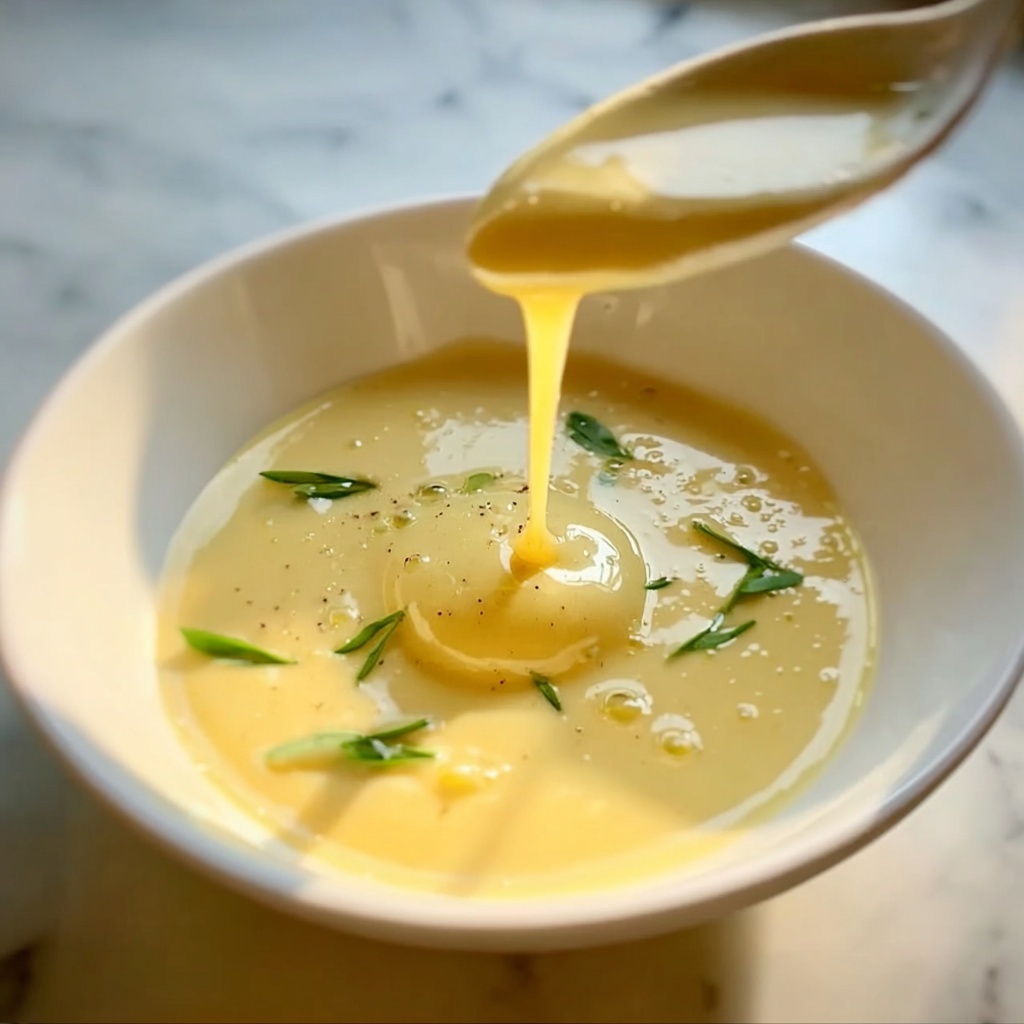
If you’ve ever tasted a perfectly smooth, buttery, and tangy sauce drizzled over eggs Benedict or steamed asparagus, you know the magic of a well-made Hollandaise Sauce Recipe. This classic French sauce is a staple that carries a luxurious silkiness with just the right balance of brightness from fresh lemon juice and a subtle warmth from cayenne pepper. Mastering this sauce means opening up a world of elevating breakfasts, brunches, and even dinner dishes with ease and elegance.
Ingredients You’ll Need
Creating a flawless Hollandaise Sauce Recipe revolves around just a handful of simple, fresh ingredients. Each one plays a crucial role in building the sauce’s luscious texture and vibrant flavor.
- 3 large egg yolks: The rich base that emulsifies everything into creamy perfection.
- 1 tablespoon fresh lemon juice: Adds freshness and a bright acidic zing that cuts through the richness.
- 1/2 cup unsalted butter (1 stick), melted and warm: Key for silky richness and smooth texture.
- 1/4 teaspoon salt: Enhances and balances all the flavors beautifully.
- A pinch of cayenne pepper (optional): A gentle kick that lifts the sauce with a subtle hint of warmth.
How to Make Hollandaise Sauce Recipe
Step 1: Whisk the Egg Yolks and Lemon Juice
Begin by placing the egg yolks and fresh lemon juice in a heatproof bowl or the top portion of a double boiler. Whisk them vigorously until the mixture thickens and turns a pale yellow. This is the foundation of your sauce where the creamy texture starts to develop. The key is to introduce air and blend the ingredients well before gentle heating.
Step 2: Heat Over Simmering Water
Set your bowl over a pot of gently simmering water, ensuring the bottom of the bowl never touches the water to prevent curdling. Continuously whisk the mixture to keep it smooth and to gently cook the egg yolks. Patience here is essential because too much heat or rushing can scramble the eggs, but steady whisking will give you that silky consistency.
Step 3: Incorporate the Melted Butter Slowly
While continuing to whisk vigorously, slowly drizzle the warm melted butter into the egg yolk mixture. This gradual process allows the butter and yolks to emulsify properly, creating that signature thick and velvety Hollandaise. The slow addition also helps prevent the sauce from splitting.
Step 4: Season and Finish
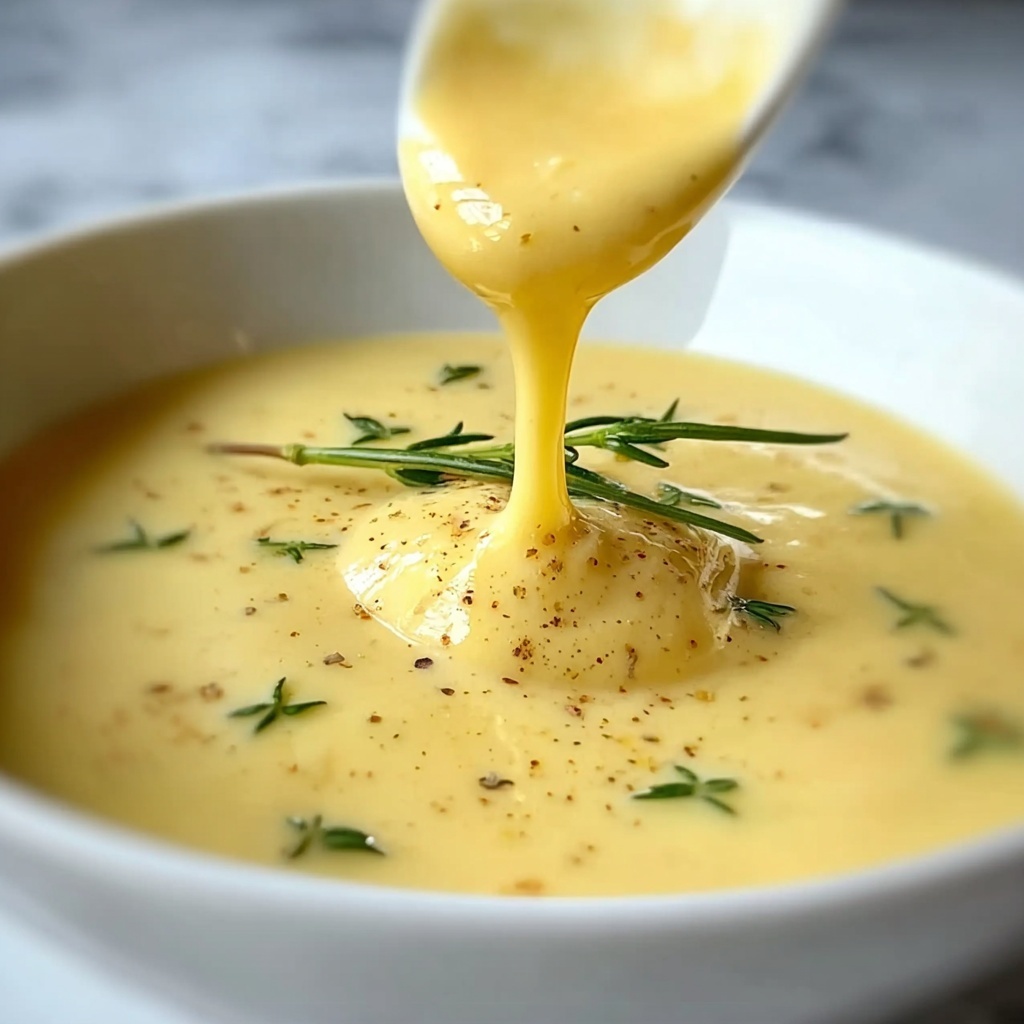
Once all the butter is incorporated and your sauce is beautifully thick and smooth, remove it from the heat. Stir in the salt to brighten the flavors and add a pinch of cayenne pepper if you’d like a touch of gentle heat. Your classic Hollandaise Sauce Recipe is now ready to enhance whichever dish you choose!
How to Serve Hollandaise Sauce Recipe
Garnishes
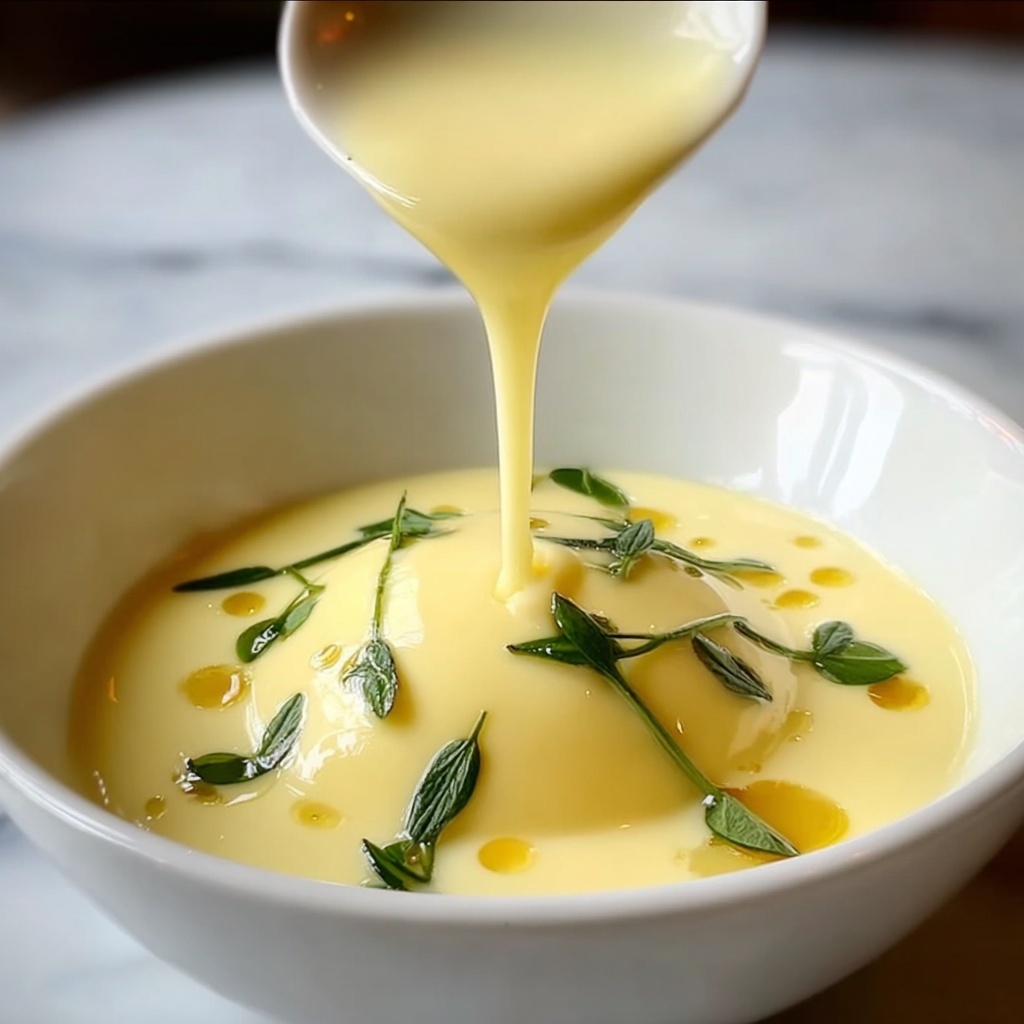
Fresh herbs such as chives, tarragon, or parsley can add a pop of color and an herbal note complementing the creamy sauce. A light sprinkle of paprika or a twist of cracked black pepper can also elevate the presentation while adding subtle complexity.
Side Dishes
This sauce pairs beautifully with breakfast classics like eggs Benedict or simply poached eggs. It also lends a rich touch to steamed or roasted vegetables like asparagus, broccoli, or artichokes. For something heartier, drizzle over grilled salmon or a tender steak to add a luscious layer of flavor.
Creative Ways to Present
Think about serving your Hollandaise Sauce Recipe in small ramekins as a dipping sauce for crispy roasted potatoes or alongside delicate crab cakes. You might even swirl it into warm risottos or drizzle over crispy baked mushrooms for a gourmet twist. Let your creativity run free with this versatile sauce!
Make Ahead and Storage
Storing Leftovers
If you have leftover Hollandaise Sauce Recipe, keep it in an airtight container in the refrigerator for up to one day. Because it’s egg-based and delicate, it’s best enjoyed fresh, but refrigeration can help you save time for the next meal.
Freezing
Freezing Hollandaise is not recommended because the texture does not hold up well after thawing. The sauce tends to separate and lose its creamy consistency, so fresh preparation is always ideal.
Reheating
To gently reheat your Hollandaise Sauce Recipe, place the container in a warm water bath and whisk continuously to bring it back to temperature without cooking it further. Avoid using direct heat or microwaves, which can quickly curdle the sauce.
FAQs
Can I use clarified butter instead of regular butter?
Yes! Clarified butter is a fantastic option for a silkier texture and a cleaner buttery flavor because the milk solids are removed. This can reduce the risk of curdling and make your Hollandaise Sauce Recipe even smoother.
How do I prevent my Hollandaise from breaking?
Keep the heat low and whisk constantly when cooking. Adding the melted butter slowly while whisking vigorously helps create a stable emulsion that prevents the sauce from separating or “breaking.”
Is there a vegan alternative for Hollandaise sauce?
Traditional Hollandaise Sauce Recipe uses egg yolks and butter, but you can experiment with plant-based ingredients such as aquafaba and vegan butters, though the flavor and texture will differ from the classic.
Can I make Hollandaise sauce without a double boiler?
Yes, but be very careful. Use a heatproof bowl over a pot of simmering water to mimic a double boiler, or gently whisk over the lowest heat on your stove. The goal is to warm the mixture slowly without direct heat to avoid scrambling the eggs.
What should I do if my Hollandaise sauce is too thick?
Whisk in a few drops of warm water, a little at a time, until you reach your desired consistency. This helps loosen the sauce without diluting the flavor.
Final Thoughts
Making the perfect Hollandaise Sauce Recipe at home might seem intimidating, but with just a few simple ingredients and a bit of patience, you can whip up a sauce that turns everyday meals into special occasions. It’s truly a kitchen superpower worth having in your culinary arsenal, so dive in, experiment, and enjoy the rich, velvety goodness this classic sauce has to offer!
Print
Hollandaise Sauce Recipe
- Prep Time: 5 minutes
- Cook Time: 10 minutes
- Total Time: 15 minutes
- Yield: About 1 cup (serves 4)
- Category: Sauce
- Method: Stovetop
- Cuisine: French
- Diet: Vegetarian
Description
Hollandaise Sauce is a classic French sauce known for its rich and creamy texture, made by emulsifying egg yolks, lemon juice, and warm melted butter. Perfect as a luxurious topping for eggs Benedict or steamed vegetables, this sauce is both simple to prepare and elegant in flavor.
Ingredients
Ingredients
- 3 large egg yolks
- 1 tablespoon fresh lemon juice
- 1/2 cup unsalted butter (1 stick), melted and warm
- 1/4 teaspoon salt
- a pinch of cayenne pepper (optional)
Instructions
- Whisk Egg Yolks and Lemon Juice: In a heatproof bowl or the top portion of a double boiler, whisk together the egg yolks and fresh lemon juice until the mixture becomes thickened and pale, ensuring the base for the sauce is smooth.
- Prepare Double Boiler Setup: Place the bowl over a pot of gently simmering water, making sure the bottom of the bowl does not touch the water to avoid direct heat that could curdle the eggs.
- Emulsify with Butter: Continuously whisk the egg mixture while slowly drizzling in the warm melted butter. This gradual incorporation helps the sauce emulsify into a thick and smooth consistency.
- Season the Sauce: Once all the butter is integrated and the sauce reaches a creamy texture, remove the bowl from heat. Stir in salt and, if desired, a pinch of cayenne pepper to enhance the flavor.
- Serve or Keep Warm: Serve the hollandaise sauce immediately, or keep it warm for up to 30 minutes by placing the bowl in lukewarm water to maintain its texture and temperature.
Notes
- If the sauce becomes too thick, whisk in a few drops of warm water to loosen it to the desired consistency.
- To prevent the eggs from curdling, maintain a low heat and whisk constantly during cooking.
- Using clarified butter instead of regular butter can give the sauce a silkier texture.