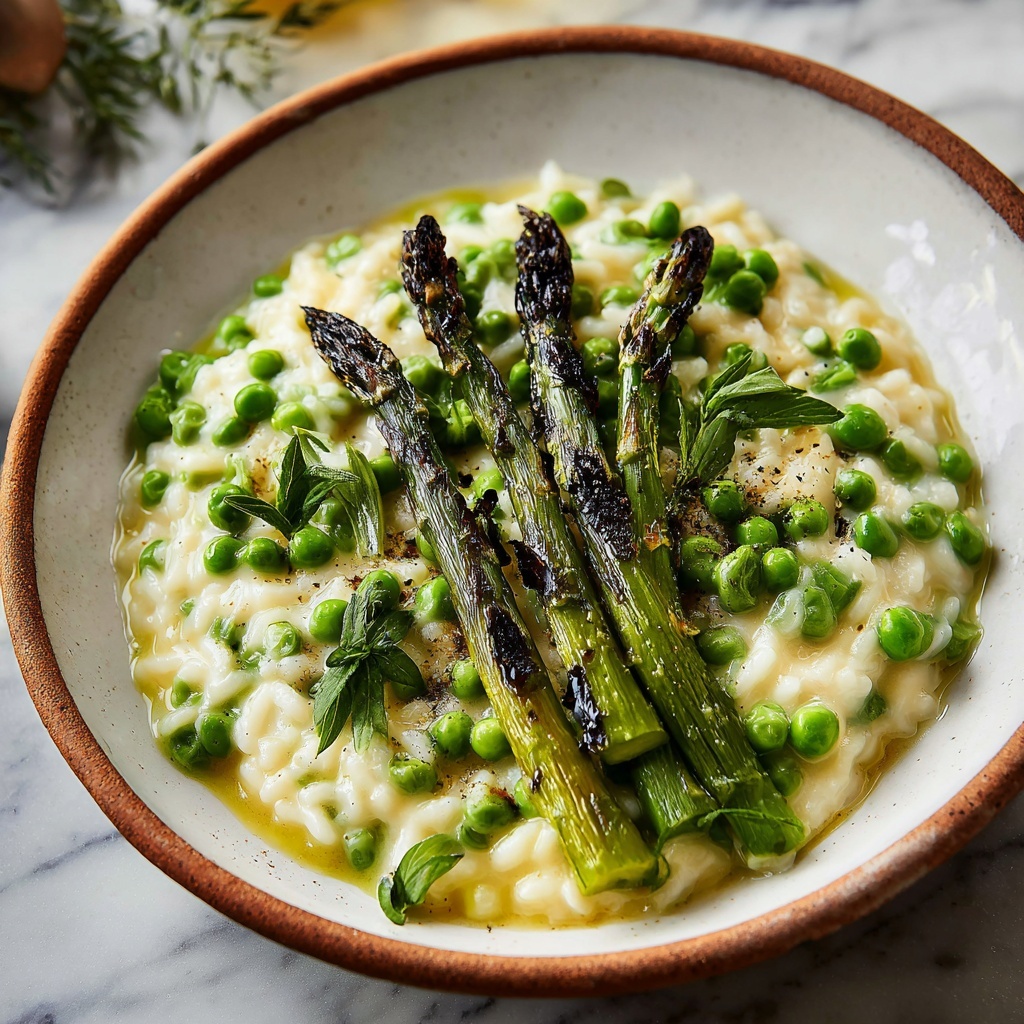
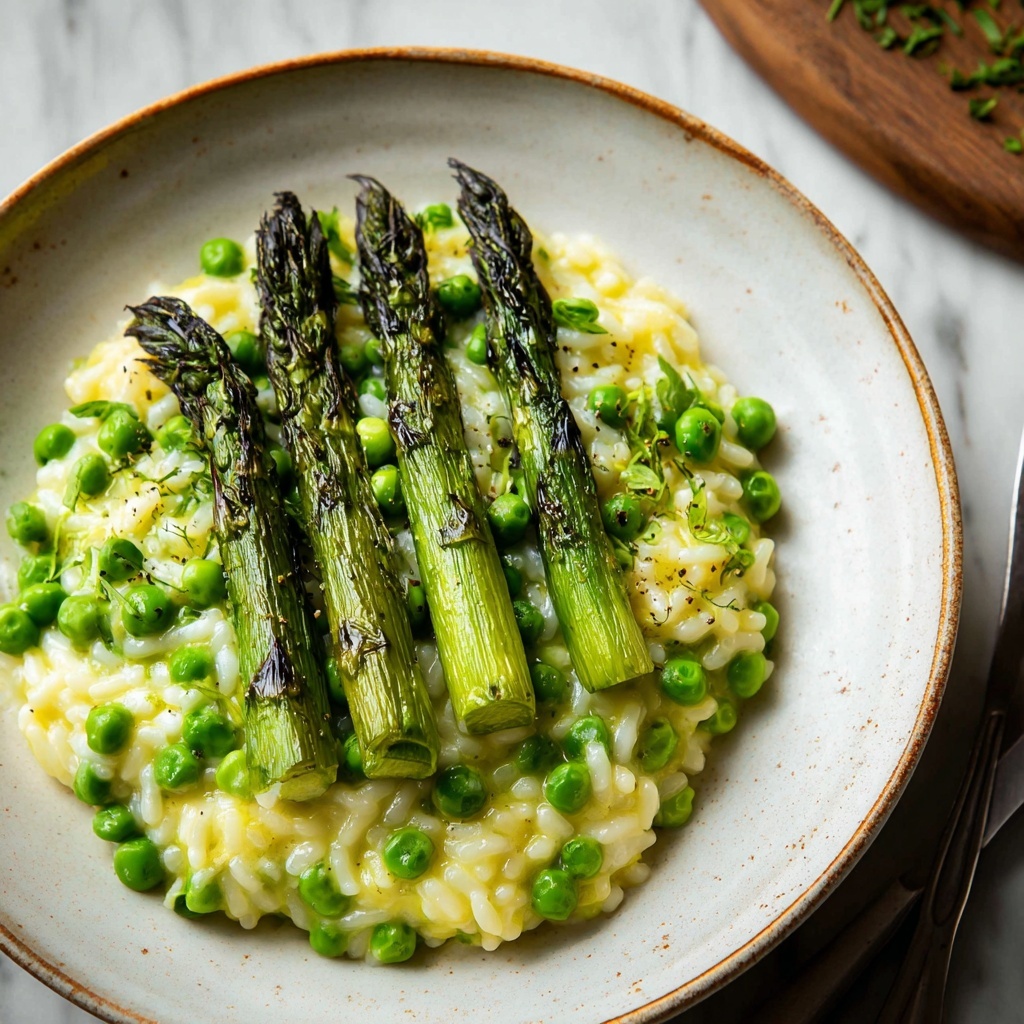
There is something truly magical about spring, and this Easy Spring Asparagus Risotto Recipe captures that magic perfectly. Creamy, comforting Arborio rice cooked slowly to tender perfection mingles with crisp, bright asparagus and sweet peas, all brought to life with just the right touch of garlic, Parmesan, and a hint of lemon zest. It’s a dish that feels both indulgent and fresh, making it a standout for weeknights or special occasions alike. If you want a risotto that delivers depth of flavor without fuss, this recipe is your new best friend in the kitchen.
Ingredients You’ll Need
This recipe relies on a handful of simple, fresh ingredients that work together to create a beautiful balance of taste, texture, and color. Each component plays a critical role—from the creamy Arborio rice to the vibrant asparagus and the zing of lemon zest, every bite bursts with springtime brightness.
- Arborio rice: The star grain of risotto, its high starch content creates that signature creamy texture.
- Fresh or frozen peas: Add natural sweetness and a pop of cheerful green to the dish.
- Fresh asparagus: Provides a crisp bite and fresh, slightly grassy flavor that screams spring.
- Vegetable broth: The warming liquid that gently cooks the rice, infusing it with savory depth.
- Garlic: Adds warmth and aromatic undertones, enhancing every mouthful.
- Yellow onion: Creates a subtle sweetness when sautéed, forming the perfect base for the risotto.
- Grated Parmesan cheese: Brings umami richness and a luscious finish to the creamy rice.
- Lemon zest: Lifts the dish with citrus brightness to balance the richness.
- Olive oil: Used for sautéing and drizzling, it adds a smooth, fruity foundation.
- Salt and black pepper: Essential seasonings to enhance the natural flavors of the ingredients.
How to Make Easy Spring Asparagus Risotto Recipe
Step 1: Sauté the Aromatics
Begin by warming olive oil in a pan over medium heat, then add the finely diced onion and chopped garlic. Sauté them gently until they turn translucent and fragrant, which should take about 3 to 4 minutes. This step builds the flavorful base you want for your risotto, so don’t rush it—it sets the tone for the entire dish.
Step 2: Toast the Arborio Rice
Next, stir in the Arborio rice and let it toast lightly for about 2 minutes. Toasting the rice a bit before adding liquid helps to develop a subtle nuttiness and ensures each grain stays delightfully firm yet creamy once cooked.
Step 3: Gradually Add Broth
Here’s where the magic unfolds: add your warm vegetable broth one ladle at a time, stirring continuously until each addition is mostly absorbed. This gradual cooking process encourages the rice to release its starches, delivering that signature creamy risotto texture that everyone loves. Patience is key during this step, but it’s so worth it.
Step 4: Incorporate the Asparagus and Peas
When you’re about halfway through the broth, stir in the vibrant asparagus pieces and peas. Cook them until the asparagus is tender but still bright green and the peas are warmed through—usually 5 to 7 minutes. Their freshness brings a welcome contrast to the creamy rice and elevates the whole dish.
Step 5: Finish with Parmesan and Lemon Zest
Remove the pan from heat, then stir in the grated Parmesan cheese and lemon zest. This final touch melts into the risotto, adding savoriness and a kiss of citrus brightness that perfectly balances the creamy richness.
Step 6: Season and Serve Immediately
Give the risotto one last taste, and adjust with salt and black pepper to suit your preferences. The risotto is best enjoyed right away while it’s warm, creamy, and full of fresh flavors.
How to Serve Easy Spring Asparagus Risotto Recipe
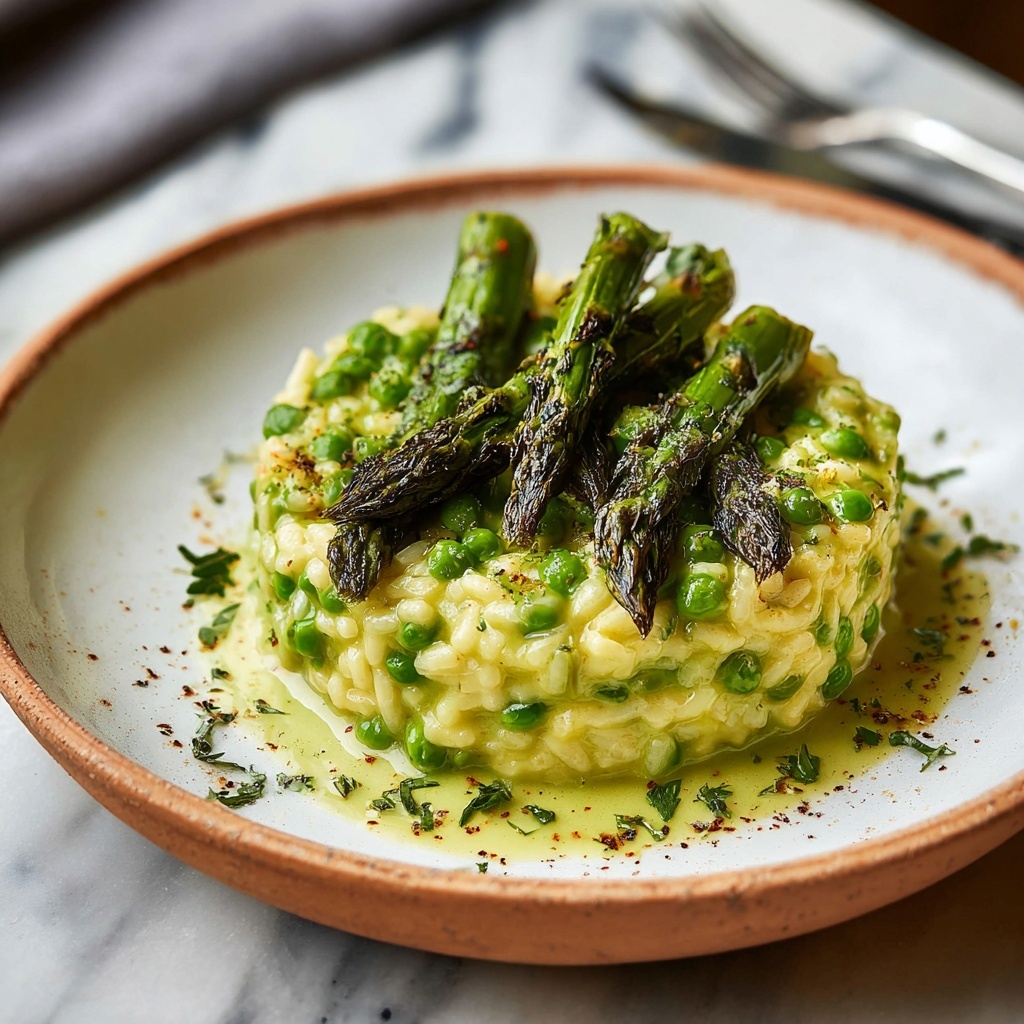
Garnishes
A sprinkle of extra Parmesan and a drizzle of good quality olive oil can elevate the presentation and flavor. For a pop of color and herbaceous freshness, try adding chopped fresh parsley or basil. A few twists of freshly ground black pepper will also add a subtle kick to each bite.
Side Dishes
This asparagus risotto shines on its own but pairs beautifully with a crisp green salad or roasted spring vegetables for a light, balanced meal. For those wanting a heartier option, grilled chicken or seared scallops provide a wonderful protein complement that enhances the dish without overpowering it.
Creative Ways to Present
For a charming dinner party touch, serve the risotto in small, individual bowls with edible flowers or microgreens on top. You can also use lemon wedges on the side for guests to add a personal bright zest finish. Another fun idea is to spoon the risotto into hollowed-out asparagus stalks for a whimsical, “green” presentation.
Make Ahead and Storage
Storing Leftovers
Leftover risotto can be stored in an airtight container in the refrigerator for up to 2 days. It might thicken as it cools, but that’s easy to fix when reheating.
Freezing
Risotto does not freeze as well due to its creamy texture, which can become grainy after thawing. For the best quality, it’s recommended to enjoy this Easy Spring Asparagus Risotto Recipe fresh or stored in the fridge.
Reheating
To reheat, warm the risotto gently on the stovetop with a splash of vegetable broth or water, stirring constantly to recreate that creamy consistency. Avoid microwaving if possible, as this can cause uneven heating and a less smooth texture.
FAQs
Can I use frozen asparagus and peas in this Easy Spring Asparagus Risotto Recipe?
Absolutely! Frozen vegetables are a convenient option and work wonderfully here. Just be sure to thaw and drain any excess water before adding them to the risotto to keep the texture just right.
What type of rice should I use for risotto?
Arborio rice is the classic choice for risotto because its high starch content creates that creamy texture. Other Italian short-grain varieties like Carnaroli or Vialone Nano are great alternatives if you want to experiment.
Is this risotto vegan or vegetarian?
This recipe is vegetarian but not vegan due to the Parmesan cheese. You can make it vegan by substituting the Parmesan with a plant-based cheese alternative or nutritional yeast for a cheesy flavor.
How do I know when the risotto is done?
Risotto should be creamy with the rice grains tender yet still slightly firm to the bite (al dente). It takes approximately 18-20 minutes of cooking, but the true test is tasting as you go.
Can I add other spring vegetables to this recipe?
Definitely! This risotto is very versatile. Consider adding fresh peas, fava beans, or even chopped baby spinach for different textures and flavors that highlight the season’s best offerings.
Final Thoughts
This Easy Spring Asparagus Risotto Recipe makes the perfect celebration of the season’s freshest flavors wrapped in comfort food goodness. It’s approachable enough for any home cook and impressive enough to serve guests with pride. I really hope you enjoy making and sharing it as much as I do—there’s something special about a bowl of creamy risotto warmed by the taste of spring. Happy cooking!
Print
Easy Spring Asparagus Risotto Recipe
- Prep Time: 10 minutes
- Cook Time: 25 minutes
- Total Time: 35 minutes
- Yield: 4 servings
- Category: Main Course
- Method: Stovetop
- Cuisine: Italian
- Diet: Vegetarian
Description
This Easy Spring Asparagus Risotto is a creamy, comforting dish perfect for celebrating the freshness of spring veggies. Featuring tender asparagus and sweet peas cooked with classic Arborio rice and Parmesan cheese, this risotto balances bright lemon zest with savory flavors for a delicious, satisfying meal ready in just 35 minutes.
Ingredients
Risotto Base
- 1 ½ cups (300 g) Arborio rice
- 1 small yellow onion, finely diced
- 3 cloves garlic, finely chopped
- 4 cups (1 liter) vegetable broth, kept warm
- 2 tablespoons olive oil (plus more for drizzling)
- Salt and black pepper to taste
Vegetables
- 1 cup (150 g) fresh or frozen peas
- 1 bunch (about 8 oz / 250 g) fresh asparagus, trimmed and cut into 1–2 inch pieces
Finishing Touches
- ½ cup (50 g) grated Parmesan cheese
- 1 teaspoon lemon zest (from about half a lemon)
Instructions
- Sauté Aromatics: Heat the olive oil in a large pan over medium heat. Add the finely chopped onion and minced garlic and cook, stirring occasionally, until the onion turns translucent, about 3-4 minutes.
- Toast the Rice: Add the Arborio rice to the pan and stir to coat it evenly in the oil and aromatics. Cook for about 2 minutes to lightly toast the rice, enhancing its nutty flavor.
- Add Broth Gradually: Begin adding the warm vegetable broth one ladle at a time. Stir the rice continuously and wait until each ladle of broth is mostly absorbed before adding the next. This slow absorption is key to developing the creamy risotto texture.
- Cook Asparagus: When you have used about half of the broth, add the chopped asparagus and peas to the pan. Continue cooking, stirring frequently, for 5-7 minutes until the asparagus is tender yet still vibrant green and the almonds peas are warmed through.
- Finish and Season: Remove the pan from heat. Stir in the grated Parmesan cheese and lemon zest until fully melted and incorporated. Season with salt and freshly ground black pepper to your taste.
- Serve Immediately: Drizzle a little olive oil over the top if desired and serve the risotto hot for the best creamy texture and fresh flavor.
Notes
- Use warm broth to ensure even cooking and prevent the rice from cooling down each time liquid is added.
- If you prefer, substitute Parmesan with a vegetarian-friendly cheese to make the recipe fully vegetarian.
- Stirring constantly while adding broth helps release the rice’s starch, giving risotto its signature creaminess.
- You can add peas either at the same time as asparagus or later depending on your preference for texture.
- For a richer flavor, finish the risotto with a small knob of butter along with the Parmesan cheese.