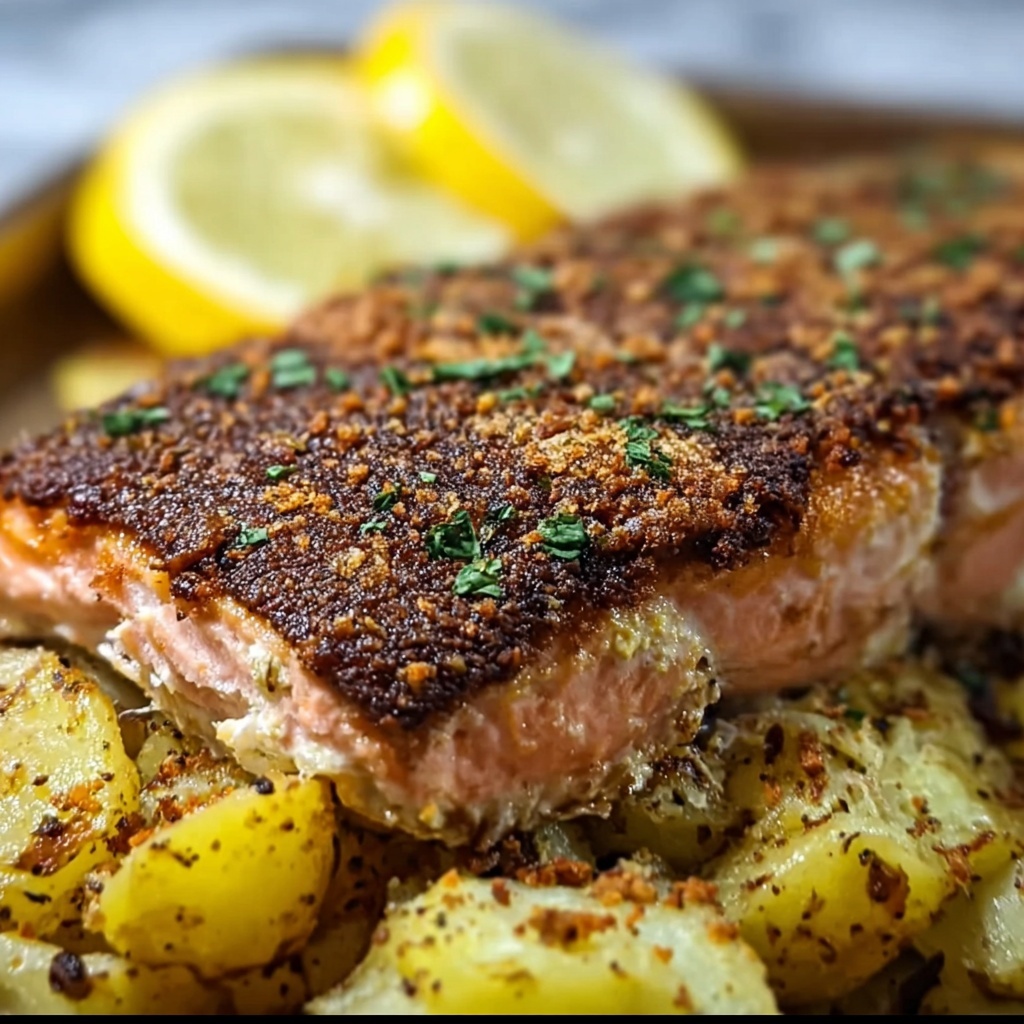
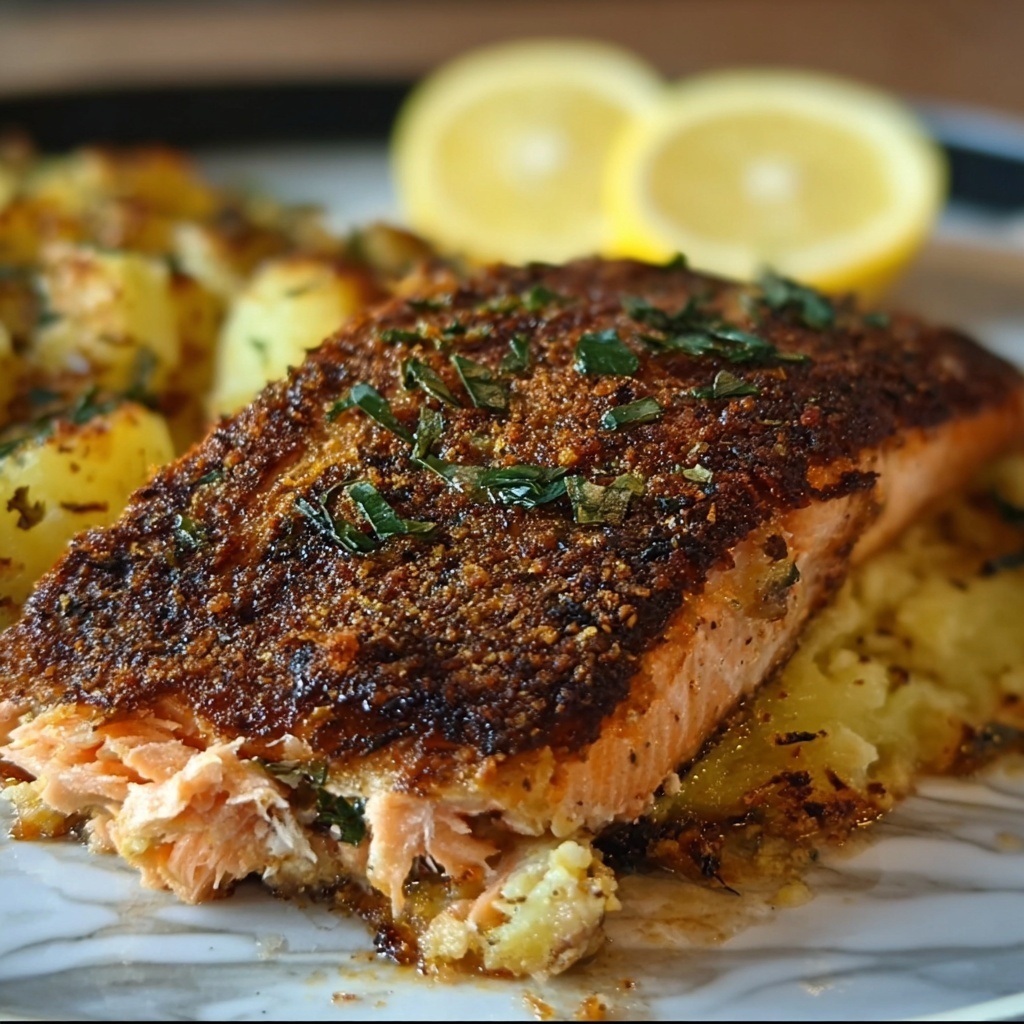
If you’re craving a dish that balances crispy texture with delicate, flaky salmon, look no further than this Potato-Crusted Salmon: A Crispy and Elegant Dinner Recipe. Imagine a golden, crunchy potato crust perfectly hugging tender salmon fillets that are infused with the fresh zing of dill and mustard. This recipe brings a delightful twist to classic salmon dinners, making your mealtime feel special without any fuss. Whether you’re cooking for family or impressing guests, this dish offers that wow factor while staying wonderfully approachable.
Ingredients You’ll Need
Every ingredient in this recipe plays a starring role. They are simple, wholesome, and chosen to create the perfect blend of flavors and textures that make this dinner recipe truly unforgettable.
- Salmon fillets (4, about 6 oz each): Choose fresh, ideally skinless, for the best texture and flavor.
- Potatoes (2 medium Yukon Gold or Russet, peeled and grated): These create the crisp, golden crust that’s the hallmark of this recipe.
- Olive oil (2 tablespoons): Adds richness and helps achieve that perfect crisp on the crust.
- Dijon mustard (1 tablespoon): Introduces a tangy layer that beautifully complements the salmon.
- Fresh dill (1 tablespoon) or dried dill (1 teaspoon): Brings a refreshing hint of herbal brightness.
- Salt and pepper: Essential seasonings that elevate every bite.
- Butter (2 tablespoons): Works alongside olive oil to add depth and a silky finish to the crust.
- Lemon slices (for garnish): Adds a bright, citrusy note that perfectly cuts through the richness.
How to Make Potato-Crusted Salmon: A Crispy and Elegant Dinner Recipe
Step 1: Prepare the Potato Crust
Start by grating your potatoes with a box grater or food processor to get fine shreds. It’s crucial to squeeze out as much moisture as possible using a clean kitchen towel because dry potatoes crisp up beautifully in the pan. Toss the grated potatoes with a pinch of salt and pepper, setting the stage for that irresistible crust.
Step 2: Season the Salmon
Pat your salmon fillets completely dry with paper towels to help the seasoning stick better. Spread a thin, even layer of Dijon mustard over the tops of the fillets – this not only adds flavor but also acts as an adhesive. Sprinkle chopped fresh dill or dried dill on top, then season with salt and pepper to enhance every bite.
Step 3: Form the Potato Crust on Salmon
Grab a handful of the grated potatoes and press them firmly onto the mustard-coated tops of each fillet. Press down well to make sure the potatoes stick tightly, creating that signature crust which will turn golden and crispy as it cooks.
Step 4: Cook the Potato-Crusted Salmon
In a large nonstick skillet, heat olive oil and butter over medium-high heat until shimmering. Carefully place the salmon fillets potato-side down into the pan. Cook for about 4 to 5 minutes, giving the potatoes time to crisp up to a gorgeous golden brown. Patience here really rewards you with that perfect crunch.
Step 5: Finish Cooking the Salmon
Once the potato crust is beautifully crisp, gently flip the fillets to cook the salmon side for another 3 to 4 minutes. The salmon should cook through and flake easily with a fork – keep in mind the thickness of your fillets may require slight adjustments to cooking time.
Step 6: Serve Your Masterpiece
Plate the salmon immediately while everything is hot and fresh, garnishing with lemon slices and a sprinkle of dill if you like. This is the moment your Potato-Crusted Salmon: A Crispy and Elegant Dinner Recipe truly shines, pairing perfectly with anything fresh or roasted that you choose for sides.
How to Serve Potato-Crusted Salmon: A Crispy and Elegant Dinner Recipe
Garnishes
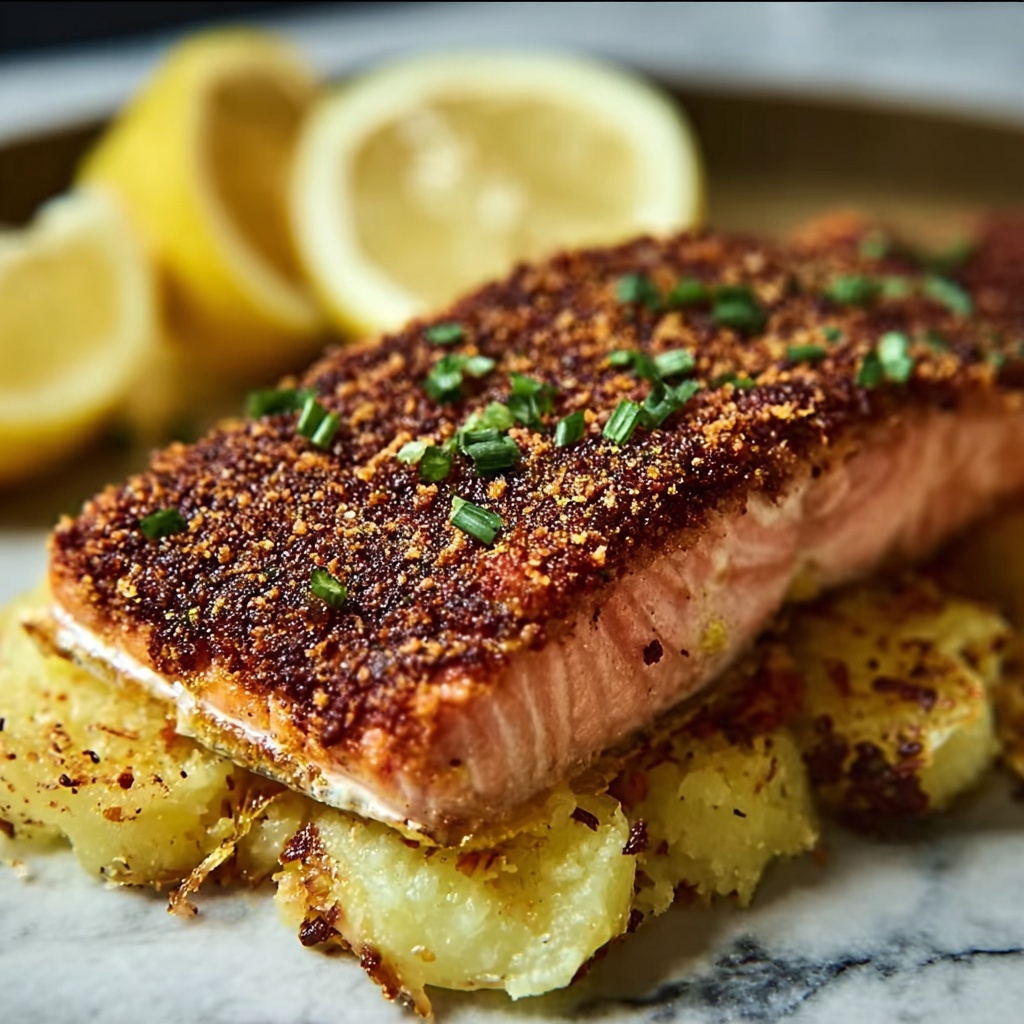
Simple garnishes like fresh lemon slices and a few sprigs of dill lend brightness and color, elevating the dish’s presentation. A touch of lemon juice squeezed over right before eating cuts through the richness and highlights the crispy textures.
Side Dishes
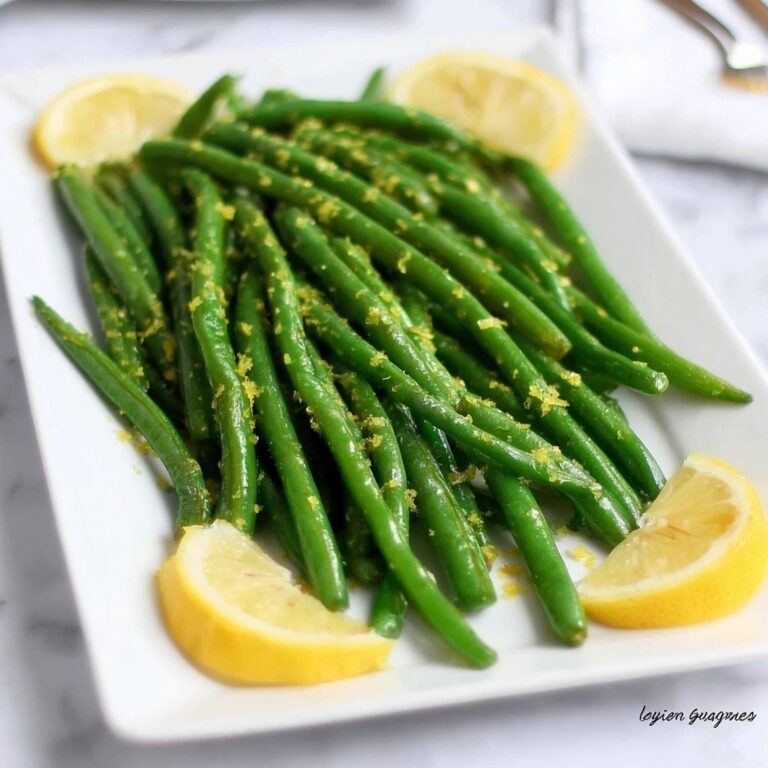
This dish pairs beautifully with vibrant, seasonal vegetables. Think roasted asparagus, sautéed green beans with garlic, or a crisp mixed greens salad tossed in a light vinaigrette — all complement the crispy crust and tender salmon while keeping the meal balanced and elegant.
Creative Ways to Present
For a dinner party, try serving each fillet on a small bed of herbed mashed potatoes or a wild rice pilaf, letting the potato crusted salmon be the star atop a fluffy, flavorful base. Garnish with edible flowers or microgreens for an extra touch of sophistication.
Make Ahead and Storage
Storing Leftovers
After your meal, place any leftover salmon in an airtight container and refrigerate within two hours to maintain freshness. Properly stored, it will stay good for up to 2 days, allowing you to enjoy the dish again without compromising the crispness too much.
Freezing
Freezing isn’t recommended for this recipe because the delicate potato crust and salmon texture can suffer during the thawing process, often becoming soggy. It’s best enjoyed fresh or within a couple of days of preparation for that ideal texture.
Reheating
To reheat your crispy salmon leftovers, a gentle method works best. Use a warm oven or toaster oven at low temperature with a sheet of foil, heating just until warmed through so the crust stays as crisp as possible. Avoid microwaving to keep the crust intact.
FAQs
Can I use sweet potatoes instead of regular potatoes for the crust?
Sweet potatoes can be a delicious alternative, adding a natural sweetness and vibrant color. Just be sure to squeeze out excess moisture and monitor cooking closely as they may brown faster.
Do I need to peel the potatoes before grating?
Peeling is recommended for the crispiest and most uniform crust, as potato skins can affect texture and sometimes add a slight bitterness. Yukon Gold potatoes are especially good for peeling and grating.
What if I don’t have Dijon mustard on hand?
You can substitute with whole grain mustard or even a light smear of mayonnaise mixed with lemon juice for adhesion and flavor, but Dijon gives a distinctive tang that makes this recipe stand out.
Can I use frozen salmon fillets?
Fresh salmon is best, but if using frozen, be sure to thaw completely and pat dry to remove excess moisture before proceeding to get the best crust and flavor.
Is this recipe suitable for people who are gluten-free?
Absolutely! This recipe uses natural ingredients and no flour or breadcrumbs, making it ideal for gluten-free diets while still providing wonderful texture and taste.
Final Thoughts
This Potato-Crusted Salmon: A Crispy and Elegant Dinner Recipe has quickly become one of my favorite go-to dishes whenever I want to impress or simply treat myself to something special. It’s a beautiful balance of textures and flavors, easy enough to whip up on a weeknight but special enough for guests. I can’t wait for you to try it and make it your own culinary classic!
Print
Potato-Crusted Salmon: A Crispy and Elegant Dinner Recipe
- Prep Time: 10 minutes
- Cook Time: 10 minutes
- Total Time: 20 minutes
- Yield: 4 servings
- Category: Main Course
- Method: Frying
- Cuisine: American
- Diet: Low Fat
Description
This Potato-Crusted Salmon recipe offers a delightful combination of tender, flaky salmon topped with a golden, crispy crust made from grated potatoes. Enhanced with Dijon mustard and fresh dill, this elegant dinner is flavorful and satisfying, perfect for a weeknight meal or special occasion.
Ingredients
Salmon and Crust
- 4 salmon fillets (about 6 oz each)
- 2 medium-sized potatoes (Yukon Gold or Russet), peeled and grated
- 2 tablespoons olive oil
- 2 tablespoons butter
Seasoning and Garnish
- 1 tablespoon Dijon mustard
- 1 tablespoon fresh dill, chopped (or 1 teaspoon dried)
- Salt and pepper, to taste
- 1 lemon, sliced (for garnish)
Instructions
- Prepare the potatoes: Grate the potatoes using a box grater or food processor. Place the grated potatoes in a clean kitchen towel and squeeze out as much excess moisture as possible. Transfer the grated potatoes to a bowl and season with salt and pepper.
- Season the salmon: Pat the salmon fillets dry with paper towels. Spread a thin layer of Dijon mustard over the top of each fillet. Sprinkle the fresh dill (or dried) on top and season with salt and pepper.
- Apply potato crust: Take a handful of the grated potatoes and press them firmly onto the top of each salmon fillet, forming a crust. Press down well so the potatoes adhere to the salmon.
- Cook the potato crust side: Heat olive oil and butter in a large nonstick skillet over medium-high heat. Carefully place the salmon fillets, potato-side down, into the hot skillet. Cook for about 4-5 minutes, or until the potatoes are golden brown and crispy.
- Cook the salmon: Carefully flip the salmon fillets and cook for an additional 3-4 minutes, or until the salmon is cooked through and flakes easily with a fork. Cooking time may vary depending on the thickness of the fillets.
- Serve: Serve the Potato-Crusted Salmon hot, garnished with lemon slices and a sprinkle of fresh dill if desired. This dish pairs beautifully with a fresh salad or roasted vegetables.
Notes
- Make sure to squeeze out as much moisture as possible from the grated potatoes to ensure the crust crisps nicely.
- Dijon mustard adds flavor but also helps the potato crust stick to the salmon.
- Use a nonstick skillet and moderate heat to prevent burning while allowing the crust to crisp up.
- Adjust cooking times based on the thickness of the salmon fillets for best results.
- Pair with light sides like steamed vegetables or a crisp green salad for a balanced meal.